
On View Until Late October 2026
The Restored Descent from the Cross (c. 1530)
Back in the Museum
Our Lord in the Attic Museum opened its doors to the public in 1888. Just three years later, in 1891, the young museum made an important acquisition: the triptych The Descent from the Cross by the South Netherlandish painter Pieter Coecke van Aelst, painted around 1530.
The triptych was given a permanent place in the former Catholic clandestine church. It hung there uninterrupted for almost a century and a half, until decades of use began to take their toll. Gaps appeared between the panels and the original frame, as well as between the individual planks of the central panel. The painting was in urgent need of a thorough restoration.
The Treatment
In order to restore the triptych, it first had to be removed from its frame — a delicate and tense process. Panel restorer Gert van Gerven and frame restorer Eric Bernhard then took the work in hand. Paintings restorer Caroline van der Elst repaired flaking paint and old, discoloured retouches. She also removed and replaced the yellowed, cracked varnish.
Back in the Museum
After restoration, the triptych once again hangs in its familiar spot in the museum. Curious about the restoration process? Until the end of October 2026, a short documentary about the restoration will be shown on a screen next to the artwork in the attic church.
Why We Supported It
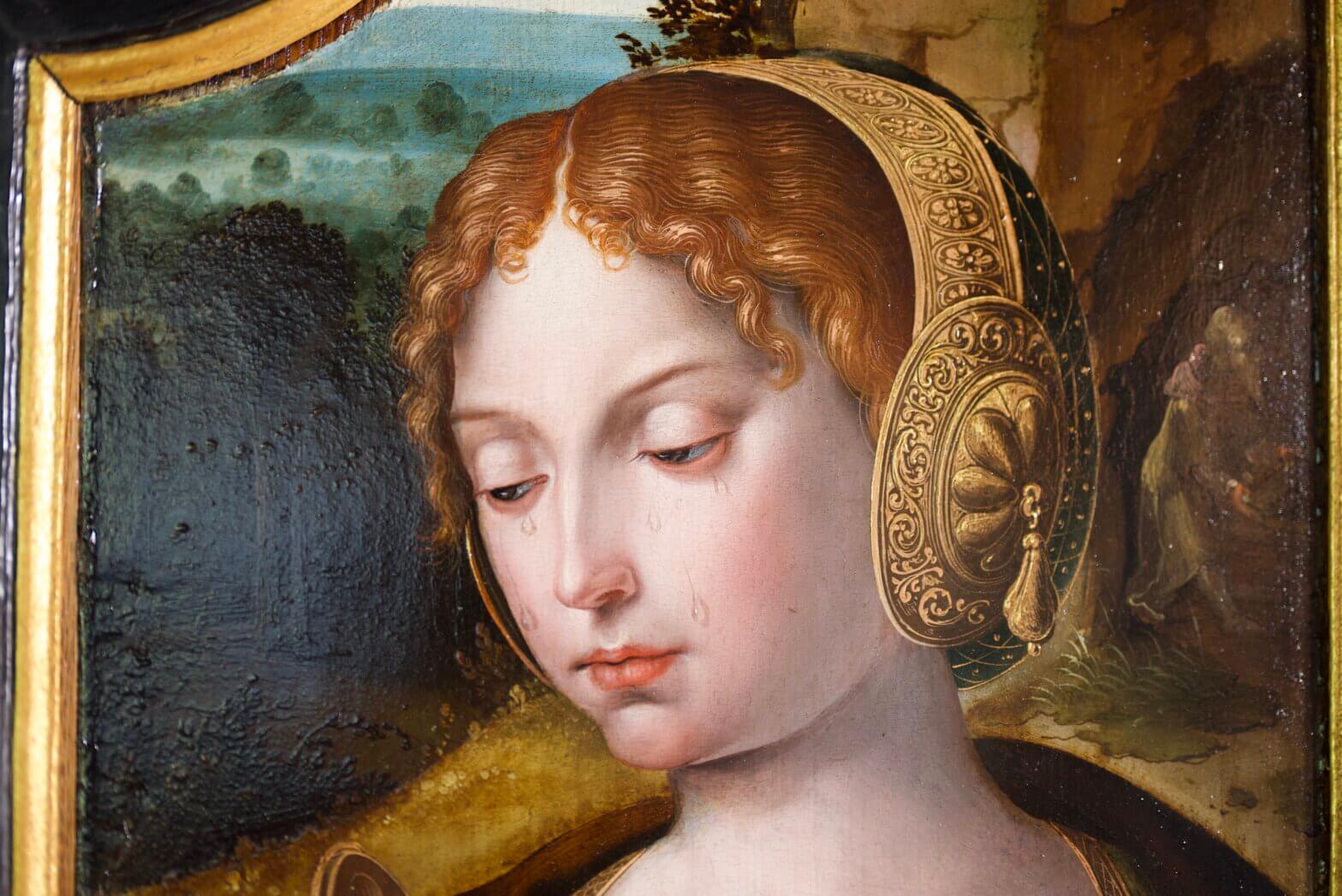
The Descent from the Cross is one of the earliest acquisitions of Our Lord in the Attic Museum, and one of the museum’s highlights. The Vereniging Rembrandt recognised both the importance of the restoration for the museum and the undeniable quality of the painting. The rich, contrasting colours and the finely detailed fabrics and ornaments are characteristic of the important Renaissance artist Coecke van Aelst. After the thorough treatment, the triptych can once again live up to its reputation as a visitor favourite.
Restored with the support of the Vereniging Rembrandt (in part thanks to its VriendenLoterij Restoration Fund)